
← 「日本酒について」にもどる Back to “About Sake”
日本酒の知識 – 器・温度・飲み方 Sake Basics – Vessels, Temperature, and Enjoyment
ここでは、日本酒をもっとおいしく、そして日本らしく楽しんでいただくために、 「器」「温度」「飲み方」「料理との相性」といった基本的なポイントを日英でご紹介します。
In this page, we introduce some practical basics of sake—vessels, serving temperature, drinking style, and food pairing—so that you can enjoy Japanese sake more fully, and in a way that reflects Japanese culture.
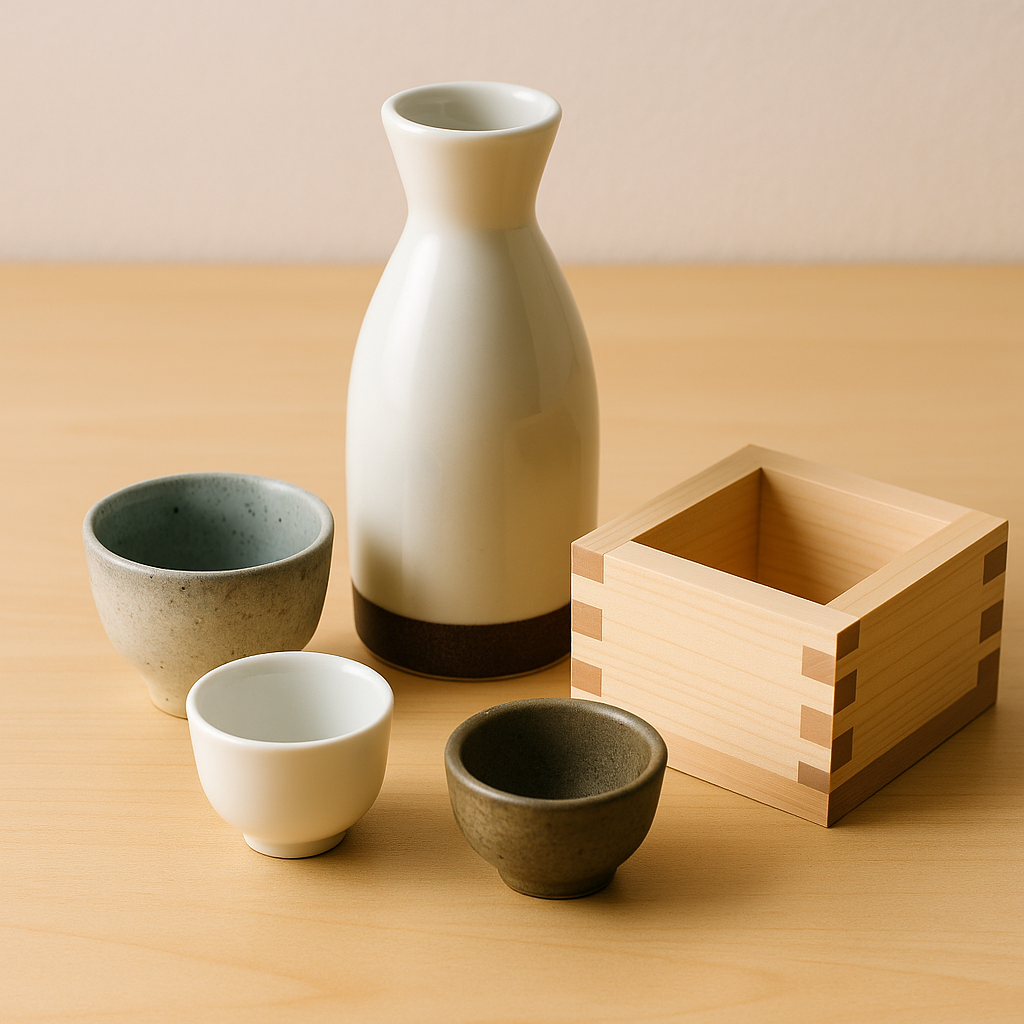
(イメージ)おちょこ・ぐい呑み・徳利・枡などの酒器 (Image) Ochoko, guinomi, tokkuri, masu and other sake vessels
一.日本酒の器 – 酒器の世界 1. Sake Vessels – The World of Shuki
日本酒は、どんな器で飲むかによって印象が大きく変わります。 小さなおちょこでちびちびと、ぐい呑みでややたっぷりと、枡で香りを楽しみながら―― 器もまた、日本酒の楽しみの一部です。
おちょこ・ぐい呑み:
小ぶりな陶器・磁器の器で、香りよりも「口当たり」と「量のコントロール」に向いています。
少しずつ注ぎ合うことで、会話が自然と生まれます。
徳利(とっくり):
日本酒を温めたり、卓上でサーブするための細長い器です。
温度が変わっていく様子も含めて、ゆっくりと楽しめます。
枡(ます):
元々は計量器ですが、今ではお祝いの席などで香りを楽しむ器として使われます。
ガラスのグラスを枡に重ねて注ぐスタイルも、近年はよく見られます。
The vessel you use can significantly change how sake feels and tastes. A tiny ochoko cup encourages slow sipping, a slightly larger guinomi allows a fuller taste, and a wooden masu box adds its own aroma. The vessel is part of the experience.
Ochoko & guinomi:
These are small ceramic or porcelain cups.
They are good for controlling the amount you drink and focusing on texture and balance,
while encouraging people to pour for each other.
Tokkuri:
A narrow-necked flask used to serve sake, often warmed.
It lets you enjoy how the flavor changes as the temperature slowly shifts at the table.
Masu:
Originally a wooden measuring box, now often used at celebrations.
Sometimes a glass is placed inside the masu and filled until it overflows,
symbolizing abundance and generosity.
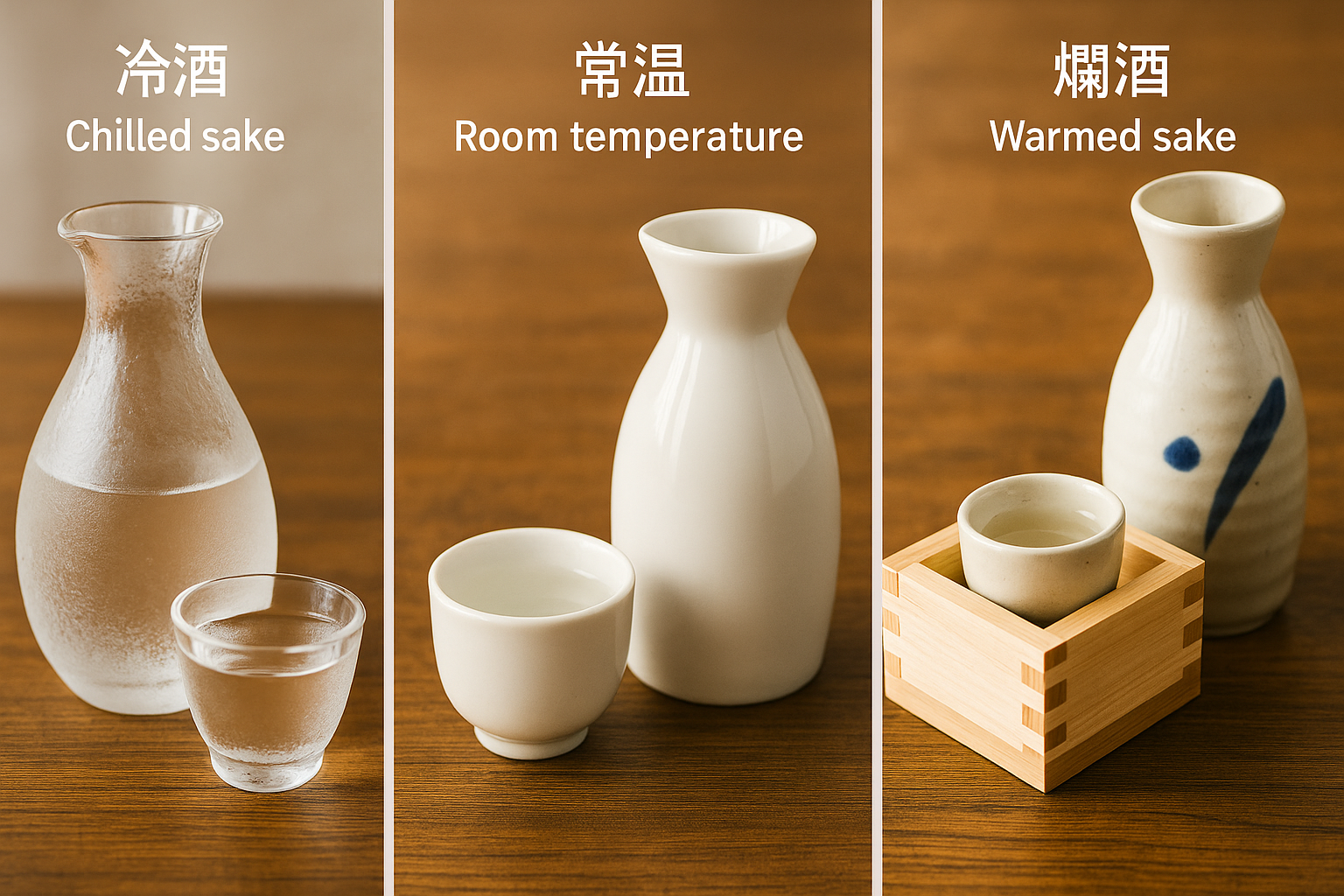
(イメージ)冷酒・常温・燗酒のイメージ (Image) Sake served chilled, at room temperature, and warm
二.温度で変わる味わい 2. How Temperature Changes the Taste
日本酒は、世界でも珍しい「温度の幅が広いお酒」です。 冷やしても、常温でも、温めても楽しめます。 温度によって香りや甘み・酸味・うま味のバランスが変わり、まるで別のお酒のように感じられることもあります。
目安としては、
・冷酒(れいしゅ)/10℃前後:香りがすっきりし、キレのある味わい。
・常温(じょうおん):香りとうま味のバランスがとれた状態。
・燗酒(かんざけ)/40〜50℃:うま味とやわらかさが前面に出てきます。
同じ銘柄でも、温度違いで試してみると、「自分にとってのベストな飲み方」が見つかるかもしれません。
One unique feature of sake is that it can be enjoyed across a wide range of temperatures: chilled, at room temperature, or warmed. As the temperature changes, the balance of aroma, sweetness, acidity, and umami also shifts.
As a rough guide:
・Chilled (around 10°C): clean, crisp, and refreshing.
・Room temperature: a natural balance of aroma and umami.
・Warm (around 40–50°C): softer, rounder, and more umami-forward.
Trying the same sake at different temperatures can be a fun way to discover how you personally like to enjoy it.
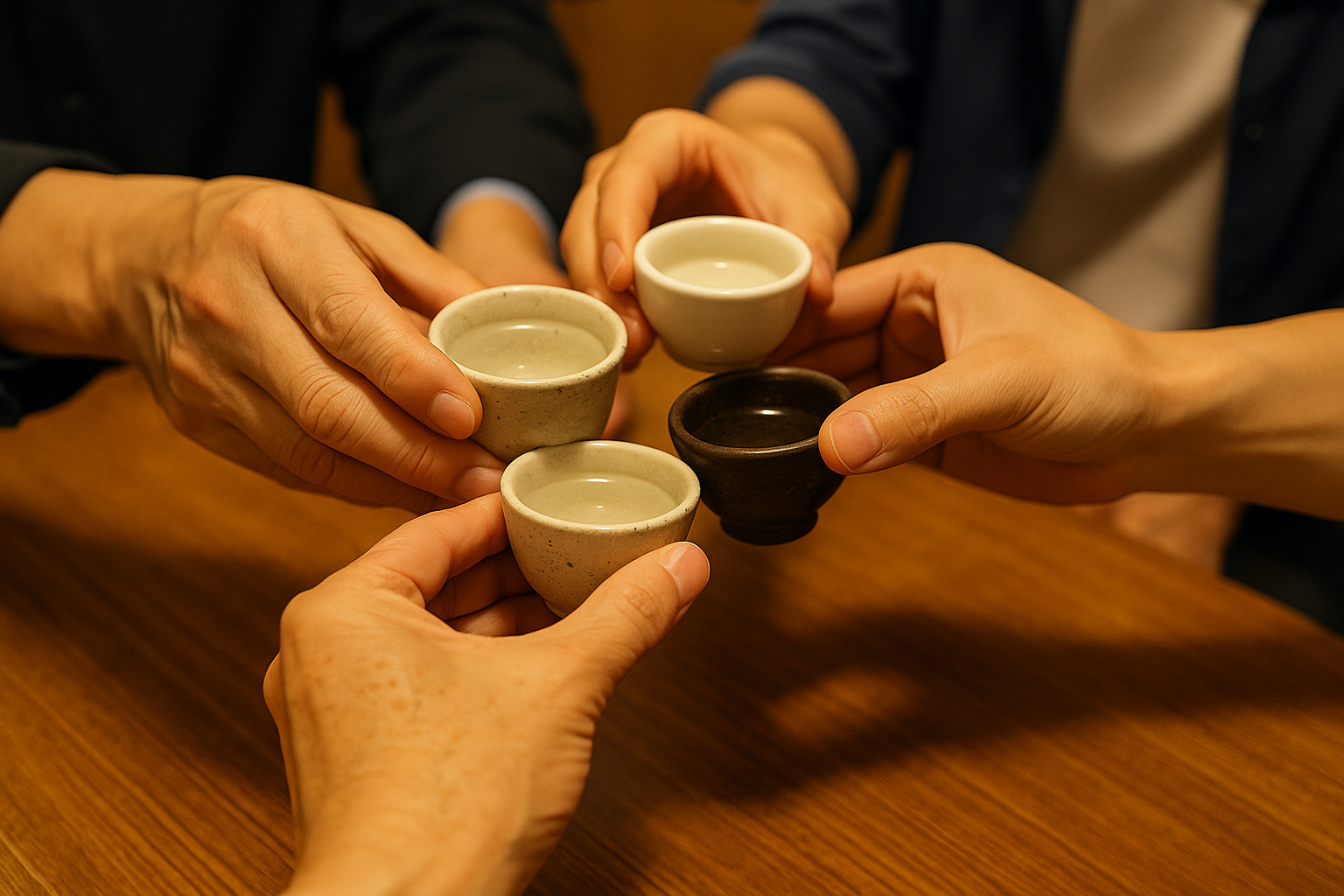
(イメージ)「乾杯!」の場面と、お互いに注ぎ合う様子 (Image) “Kampai!” and people pouring sake for each other
三.日本人の飲み方とマナー 3. Japanese Drinking Style and Manners
日本酒の場では、「誰と飲むか」「どう飲むか」も大切にされます。 代表的なポイントをいくつかご紹介します。
お互いに注ぎ合う文化:
日本では、自分の盃よりも「相手の盃が空いていないか」を気にかけます。
目上の方やゲストの盃が空きそうなら、「いかがですか」と一声かけて注ぎます。
自分で注がない:
必ずしも厳格なルールではありませんが、目上の方の前では、
自分の盃を自分でなみなみと注ぐのは、あまり上品とはされません。
「乾杯」からはじめる:
グラスにお酒が行き渡ったら、「かんぱい!」の音頭で一斉に口をつけます。
これもまた、日本酒が「人と人をつなぐ飲み物」であることを象徴する瞬間です。
In Japan, how and with whom you drink is considered just as important as what you drink. Here are a few key points about Japanese sake etiquette.
Pouring for others:
Rather than focusing on refilling your own cup, you pay attention to those around you.
If someone’s cup is nearly empty—especially a guest or senior—you offer to pour for them.
Avoid pouring only for yourself:
It’s not a strict rule, but in formal or traditional settings,
it can look a bit impolite to just fill your own cup without considering others.
Starting with “Kampai”:
Once everyone has a drink, someone will call “Kampai!” and everyone takes the first sip together.
It’s a small ritual that reminds us sake is a drink that connects people.
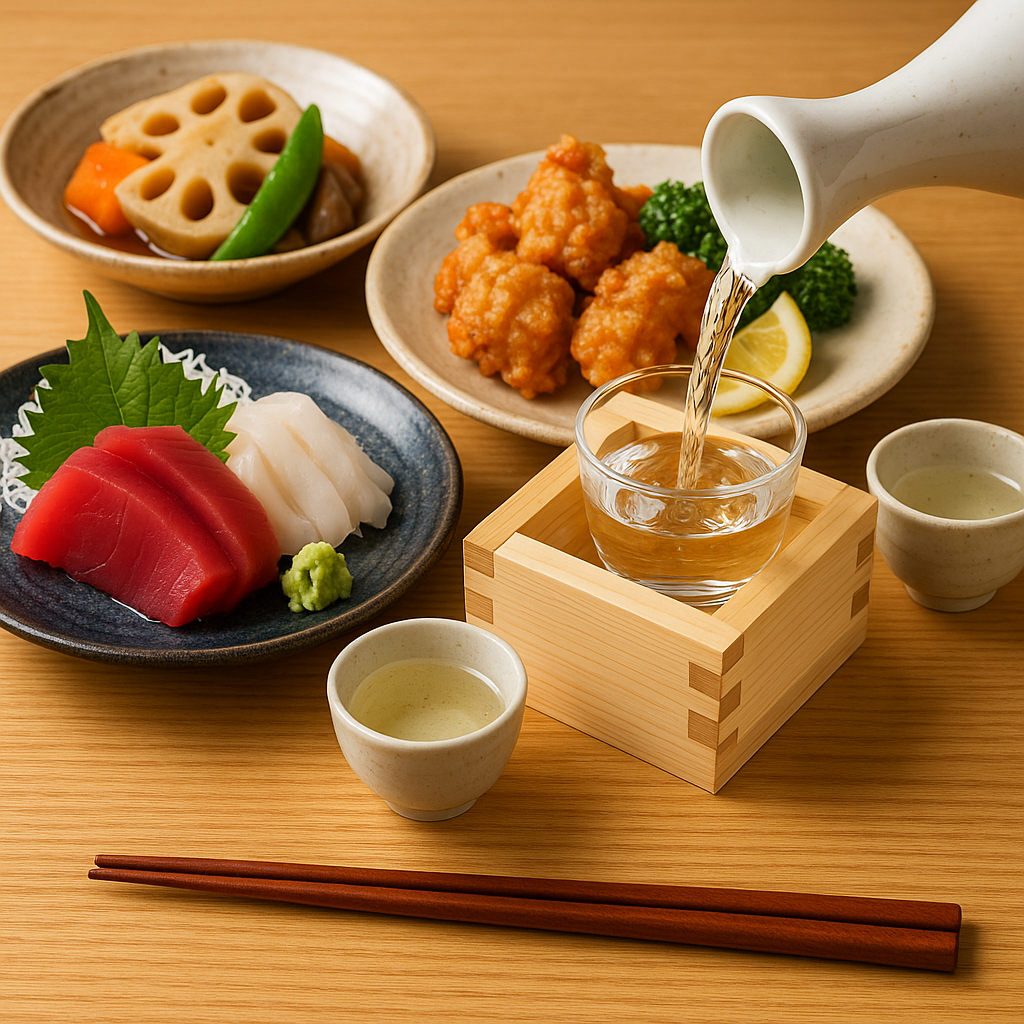
(イメージ)和食と日本酒のペアリング (Image) Sake paired with Japanese dishes
四.料理との相性と、海外での楽しみ方 4. Food Pairing and Enjoying Sake Abroad
日本酒は、和食だけでなく、さまざまな料理と相性のよいお酒です。 うま味が豊かなため、塩味やだしのきいた料理とはもちろん、 チーズやバターを使った料理とも意外なマリアージュを生みます。
・淡い味つけの刺身や白身魚には、香りおだやかでキレのよいタイプを。
・煮物や焼き鳥、チーズなどには、コクのある純米酒や燗酒を試してみるのも一案です。
・海外の方には、「ワインの代わりに合わせてみてください」とお伝えすると、イメージがつかみやすくなります。
海外で日本酒を楽しまれる際には、まずは自分の好きな料理とあわせてみて、 「こういう風に味が変わるんだ」という発見から始めていただくのがよいかもしれません。
Sake pairs not only with Japanese cuisine but with many kinds of dishes. Because it is rich in umami, it works well with salty or dashi-based flavors, and can also create surprising harmony with cheese or buttery dishes.
・For delicate sashimi or white fish, a clean, light sake with gentle aroma works well.
・For simmered dishes, yakitori, or cheese, a fuller-bodied junmai or gently warmed sake can be a good match.
・For people overseas, you can suggest: “Try pairing it as you would with wine.”
When enjoying sake abroad, a good starting point is simply to pair it with foods you already love, and notice how the flavors change. From there, you can explore different styles of sake.