
← 日本酒にまつわる落語 一覧にもどる Back to sake & rakugo stories
長屋の花見(ながやのはなみ) Nagaya no Hanami – The Tenement’s Cherry-Blossom Party
ここでは、古典落語「長屋の花見」をもとにしたお話を、日本語と英語で“情景が浮かぶ読み物”としてご紹介します。 貧乏長屋の人々が、ほんの少しの酒と知恵、そして想像力で作りあげる、にぎやかで可笑しな花見の一日です。
Here we present a story based on the classic rakugo piece “Nagaya no Hanami” (“The Tenement’s Cherry-Blossom Party”) in both Japanese and English. The residents of a poor nagaya tenement use a little sake, a lot of creativity, and their imagination to enjoy a lively and comical day of cherry-blossom viewing.
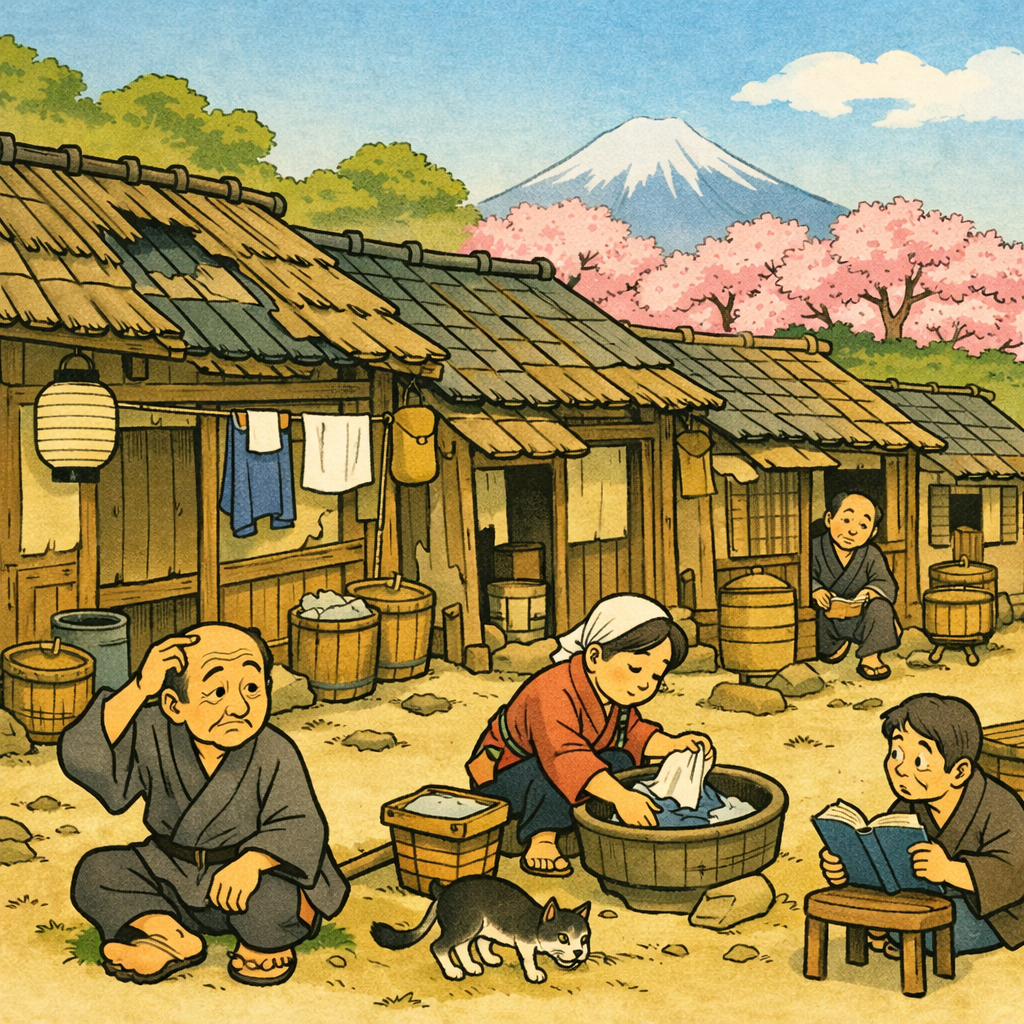
(イメージ)江戸の長屋と、遠くに見える桜 (Image) Edo tenement houses with cherry blossoms in the distance
一.貧乏長屋にも春が来る 1. Spring Comes Even to the Poor Tenement
時は江戸の春。長屋の前の通りにも、少し離れた土手にも、桜が咲きはじめました。 とはいえ、長屋に住むのは日々の暮らしで精一杯の人々ばかり。 花見どころか、今夜の米にも困るような暮らしです。
そんな長屋の大家さんが、ある日ふと思いつきます。
「まあ、たまにはここの連中にも、花見のまねごとでもさせてやるか」
大家は小遣いをはたいて、少しばかりの酒と、安い団子やかまぼこを買い込みます。
「おーい、みんな。今度の日曜は花見に行くぞ」
長屋中がざわつきます。
「えっ、花見!?」「本当に行けるのかい」「弁当なんか、用意できないよ」
「心配するな」と大家。
「肴はこっちでなんとかする。お前らは、着物だけ着てついて来りゃいい」
It was spring in Edo. Cherry blossoms bloomed along the road and on the distant riverbank. The people of the nagaya tenement, however, were so poor that they worried more about tonight’s rice than about flower viewing.
One day, the landlord of the nagaya had an idea.
“Well, perhaps I should let these folks enjoy at least a make-believe hanami once a year,” he thought.
He used his own pocket money to buy a little sake and cheap snacks like dumplings and fish cakes.
“Listen, everyone! We’re going cherry-blossom viewing this Sunday!” he announced.
The tenement buzzed with excitement.
“Hanami? Really?” “Can we actually go?” “We can’t afford fancy lunch boxes.”
“Don’t worry,” said the landlord. “I’ll handle the food. All you lot have to do is put on your best clothes and follow me.”
二.大根が“かまぼこ”に、ぬか漬けが“奈良漬け”に 2. Turnips Become Fish Cakes, Pickles Become Delicacies
とはいえ、大家の財布もそんなに豊かではありません。 そこで考えたのが、「見立て(みたて)」のごちそう作戦。 本物は少しだけ、あとは“それらしく見せる”工夫です。
まずは、大鍋いっぱいの大根の煮物。
「これはね、“かまぼこ”ってことにするんだ」
形のきれいなところを切り出して、白い皿に並べれば、遠目には豪華な一品に見えます。
それから、いつものぬか漬け。
「これは“奈良漬け”ってことにしよう」
皿にきれいに盛りつけて、ちょっと醤油をたらせば、それらしい雰囲気です。
酒は、ほんの少しだけ本物を買い、残りの徳利には水を入れて薄めておきます。
「どうせ長屋の連中は本物の味なんざ知らねえ。気分さえよけりゃ、なんでもうまい」
Of course, the landlord’s purse wasn’t exactly full either. So he devised a “mitate feast”—a spread of dishes that only looked luxurious. There would be a little real food, and the rest would be clever substitutions.
First, he prepared a huge pot of simmered daikon radish.
“This will be our ‘fish cake’ dish,” he said.
Cut neatly and arranged on white plates, it could pass for something more extravagant from a distance.
Then came the everyday nukazuke pickles.
“We’ll call these ‘Narazuke’—fancy aged pickles from Nara.”
Nicely plated with a dash of soy sauce, they looked surprisingly refined.
As for the sake, he bought a small amount of the real thing and diluted it with water in extra flasks.
“The folks in this nagaya hardly ever taste real top-quality sake,” he thought.
“If the mood is good, anything will taste fine.”

(イメージ)大根や漬物を“ごちそう風”に盛りつけた花見弁当 (Image) Simple radish and pickles presented as a festive hanami feast
三.桜の下の大宴会 3. A Grand Banquet Under the Blossoms
当日。長屋の面々は、めったに出さない“よそ行き”の着物で勢ぞろい。 子どもたちもはしゃぎながら、大家のあとについて土手へ向かいます。
桜の下にござを広げ、例の「見立てごちそう」が並べられます。
「おお、こりゃあすごい」「かまぼこが山盛りだ」「奈良漬けまである!」
普段質素な食事しか口にしない長屋の人々にとっては、それだけでごちそうに見えるのです。
大家は得意げに徳利を並べます。
「さあさあ、おめえさん方。今日は遠慮はいらねえ。どんどんやりな」
長屋の男たちは、盃を手に取って口々に言います。
「おう、こいつはうまそうだ」「いい香りだなあ」
実際には、かなり薄めの酒なのですが、みんなすっかり花見気分。
On the appointed day, the residents of the nagaya gathered, dressed in their best clothes—the ones they almost never had reason to wear. Children bounced along excitedly as they followed the landlord toward the riverbank.
Under the cherry trees, they spread out straw mats and laid out the “mitate feast.”
“Look at all this!”
“So much fish cake!”
“They even have Narazuke pickles!”
For people used to very plain meals, the sight alone felt luxurious.
The landlord proudly placed the flasks of sake on the mat.
“All right, everyone, no need to hold back today. Drink up!”
The men of the nagaya took their cups, saying:
“This looks good.” “Nice aroma!”
In reality, the sake was quite diluted, but surrounded by blossoms and friends, they felt fully in the hanami spirit.

(イメージ)桜の下で盃を交わす長屋の人々 (Image) Tenement residents sharing sake under the cherry blossoms
四.酔っているのは、酒か、雰囲気か 4. Drunk on Sake… or on Atmosphere?
しばらくすると、長屋の男の一人が、ゆらゆらと立ち上がって言います。
「いやあ、桜の下で飲む酒は、いつもより回りが早いや」
隣の男も負けじと、
「まったくだ。もう足元がふらついてきた」
と言いながら、わざとらしくよろけてみせます。
それを見た大家が、内心ほっとしながらも、ニヤニヤと笑います。
「そりゃあ、桜が酔わせてるのさ」
実のところ、盃に入っているのはほとんど“花見水”のようなもの。
けれど、長屋の人々は、春の空気と桜の景色にすっかり酔いしれていきます。
やがて誰かが歌い出し、手拍子が起こり、子どもたちも輪になって走り回る―― ささやかながら、長屋にはまぎれもない“春の宴”が広がっていきました。
After a while, one of the men swayed to his feet and declared:
“Sake under the cherry blossoms really goes to your head quickly!”
Not to be outdone, another said:
“You’re telling me—my legs are already wobbly,”
as he exaggerated a clumsy stagger.
Watching them, the landlord felt secretly relieved and smiled to himself.
“It’s the blossoms doing the intoxicating,” he said.
In truth, the cups held little more than “hanami water,” but the men were drunk
on the spring air and the beautiful view as much as on the sake.
Before long, someone started singing, others clapped along, and children ran in circles around them. Modest as it was, it had become a genuine spring banquet for the nagaya.

(イメージ)本物の酒と“花見水”が並ぶ徳利 (Image) Real sake and “hanami water” sharing the same tray
五.オチ ― 一番“違いがわかる”のは 5. The Punchline – Who Really Knows the Difference?
そんな中、一人の男が、ふと徳利を持ち替えます。
「おや、この徳利だけ、やけに香りがいいな」
実はそれが、大家が自分用にこっそり用意しておいた“本物”の徳利。
男は、一口飲んで目を丸くします。
「な、なんだ、このうまい酒は!」
まわりもざわざわ。
「本当かい?」「さっきまでのと、そんなに違うのか?」
みんなが徳利を回し始めたところで、大家が慌てて止めに入ります。
「あーあー、それは、ええと……薬酒だ、薬酒! 体の弱い者にだけ出すやつだ」
すると長屋の一人が、にやりとして言います。
「なるほどねえ。じゃあ、さっきまでのは“薬になる前”ってところかい?」
「どういう意味だ」
「水だってことさ」
一同、どっと笑いが起き、大家も観念して言います。
「まあ、バレちまったが、楽しんでくれたなら、それでいいじゃねえか」
かくして、“本物”も“花見水”も、みんなで分け合うことになりました。
Amid the merriment, one man happened to pick up a different flask.
“Hmm? This one has a much richer aroma,” he said.
In fact, it was the landlord’s secret flask of real, undiluted sake—kept aside for himself.
He took a sip and his eyes widened.
“What is this? This sake is amazing!”
The others murmured in surprise.
“Really?” “Is it that different from what we’ve been drinking?”
As they began passing the flask around, the landlord hurried over to stop them.
“Ah—uh—that’s… medicine! Yes, medicinal sake! Only for those who are weak of body,” he claimed.
One of the tenants grinned and said:
“I see. So what we’ve been drinking until now must be ‘before it became medicine.’”
“What’s that supposed to mean?” asked the landlord.
“It means it was just water.”
Everyone burst out laughing, and the landlord finally gave in.
“All right, all right, you caught me. But if you enjoyed yourselves, that’s what matters, isn’t it?”
And so, the real sake and the “hanami water” ended up being shared among them all.
六.ひとこと解説 ― 貧乏でも“花見と酒”はあきらめない 6. A Brief Note – Never Giving Up Hanami and Sake
「長屋の花見」は、決して豊かとは言えない人々が、知恵と想像力で季節の楽しみを作りあげる噺です。 本物のごちそうや高級酒はなくても、“みんなで桜を見る”という時間そのものが、何よりの贅沢として描かれています。
日本酒もまた、「高価な銘柄だから価値がある」のではなく、 その場にいる人どうしの距離を近づけ、笑いと会話を生み出す存在として登場します。 長屋の人々が“花見水”でも酔った気分になれるのは、 まさに日本酒文化が持つ「雰囲気を楽しむ力」を象徴していると言えるでしょう。
“Nagaya no Hanami” shows how people with very little money still create their own seasonal pleasures with wit and imagination. Even without luxurious food or expensive sake, the simple act of gathering under the blossoms becomes the greatest luxury of all.
Sake here is not valuable merely because of brand or price. It appears as something that brings people closer, filling the space with conversation and laughter. The fact that the residents can feel “drunk” on what is almost just water symbolizes a key aspect of Japanese sake culture: the joy of atmosphere and togetherness.
※ここで紹介している落語は、物語の流れや文化的な魅力をお伝えするための簡易版です。実際の高座には、語り手の技や間(ま)、声色の変化など、多くの魅力があります。ぜひ機会があれば、プロの落語家の実演をお楽しみください。
※The rakugo stories introduced here are simplified versions designed to convey the flow of the narrative and the cultural charm behind each piece. The true humor, timing, and expressive voices of rakugo can only be fully appreciated in a live performance. If you have the chance, please enjoy a professional rakugo storyteller’s performance.