
← 日本酒にまつわる落語 一覧にもどる Back to sake & rakugo stories
居酒屋(いざかや) Izakaya – A Night at the Tavern
ここでは、古典落語でおなじみの題材「居酒屋」をもとにしたお話を、日本語と英語で“物語として”ご紹介します。 江戸の大衆酒場で、つい「値段」が気になってしまう男と、商売上手な女将とのかけ合いを通じて、 日本酒と庶民の笑いの世界をのぞいてみましょう。
Here we present a story based on the classic rakugo theme “Izakaya,” in both Japanese and English. In an Edo-era tavern, a man who can’t stop worrying about prices and a shrewd proprietress trade lines in a light-hearted battle of wits—offering a glimpse into the world of sake and everyday humor.
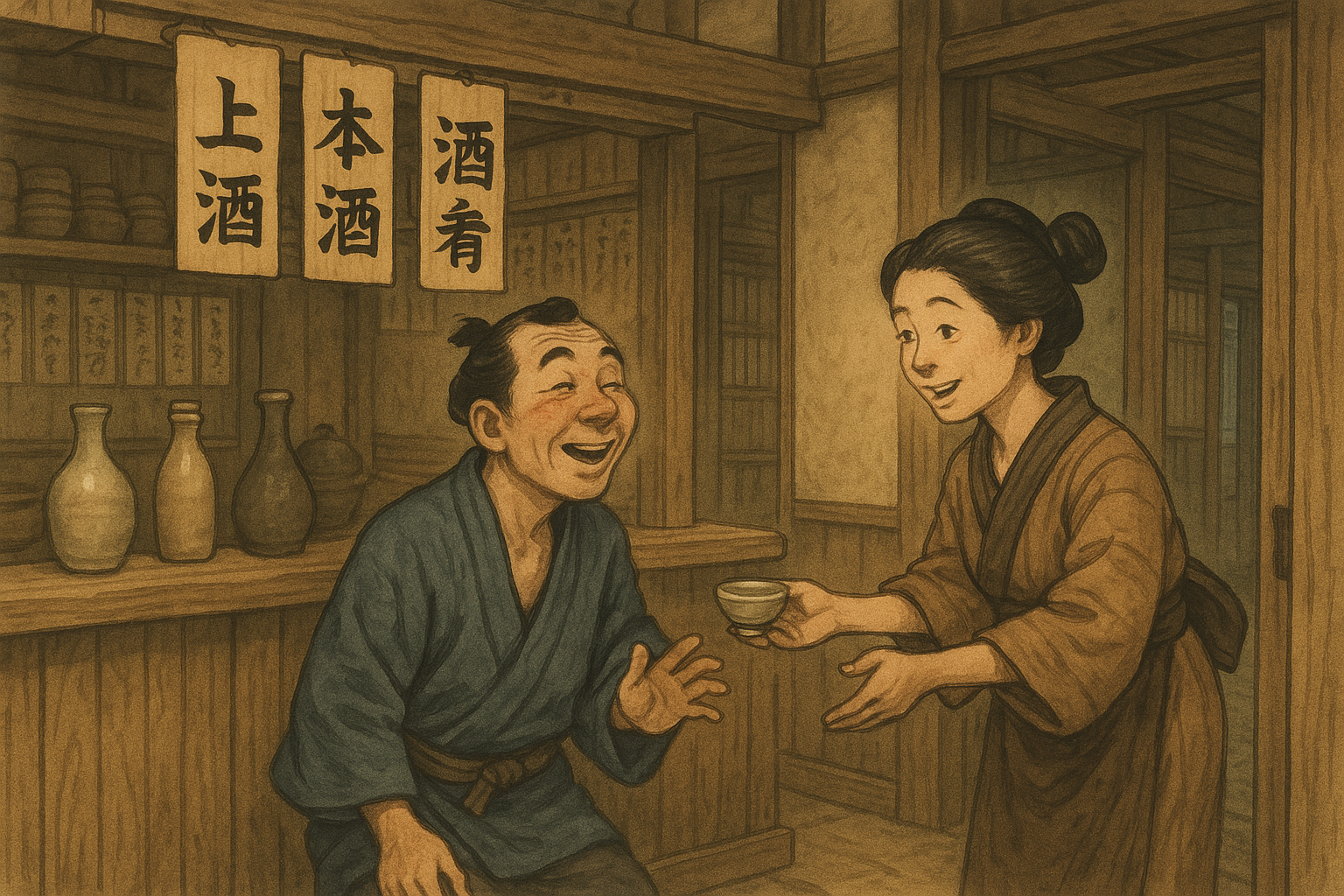
(イメージ)御客を出迎える居酒屋の女将 (Image)A proprietress welcoming guests at an Edo-period izakaya
一.仕事帰りの男、暖簾をくぐる 1. After Work, Under the Noren Curtain
時は江戸の夕暮れどき。仕事を終えた町人が、ふらりと居酒屋の暖簾をくぐります。 中はすでににぎやかで、魚の焼ける香りと、温めた燗酒の湯気が立ちのぼっています。
「へい、いらっしゃい。お一人さんかい?」
と、きびきびした江戸言葉で声をかけるのは、この店の女将。
男は腰をおろしながら、ちょっと遠慮がちに言います。
「ああ、一人なんだがね。まあ、軽く一杯……」
「はいよ、まずはお酒だね」
女将は慣れた手つきで、徳利を温め始めます。
ところが男、ふと思い出したように女将を呼び止めます。
「あ、ちょっと待っておくれ。その前に――いくらか、聞いとこうかね」
It was evening in old Edo. A townsperson, finished with work for the day, slipped under the noren curtain of a local izakaya. Inside, it was already lively: the smell of grilling fish and the steam from warmed sake filled the air.
“Welcome! Table for one?” called out the proprietress in brisk Edo speech.
The man sat down a bit cautiously.
“Yes, just me. I’ll have… a little something to drink.”
“All right, one sake to start,” she replied, already reaching for a tokkuri to warm.
But then the man suddenly raised his hand.
“Wait, wait—before that… maybe I’d better ask how much everything costs.”
二.つまみと値段の“攻防戦” 2. The “Battle” Over Snacks and Prices
女将は、にやりと笑って返します。
「へえ、堅いこと言うねえ。まあ、なんでも聞いておくれよ」
「じゃあさ、まずはこの“ぬた”はいくらだい?」
「それはね、三百文」
「ほう……じゃあ、その隣の“焼き魚”は?」
「それは五百文」
「五百! じゃあ、この“豆腐”は?」
「二百」
「ふむふむ……」
男は、品書きを見ながら真剣に計算を始めます。
「酒が一合でいくらだい?」
「一合で二百文。燗をつけても同じだよ」
「てぇことは、豆腐と酒で四百文……ぬたを足して七百、焼き魚まで頼むと千二百……」
女将は笑いながら言います。
「あんたね、居酒屋に来てそろばんを弾いてたら、せっかくの酒が薄まっちまうよ」
「いや、こちとら懐が薄いんでね。酒まで薄まっちゃ困るんだ」
The proprietress smiled slyly.
“Oh my, you’re a careful one. Ask away.”
“All right then, how much is this vinegared miso dish here?”
“That one’s three hundred mon.”
“Hmm… and the grilled fish next to it?”
“Five hundred.”
“Five hundred! What about this tofu?”
“Two hundred.”
“I see, I see…”
The man began seriously doing the math in his head as he studied the menu.
“And how much for one serving of sake?”
“Two hundred mon per cup, warmed or not.”
“So tofu and one cup of sake make four hundred… add the vinegared dish and that’s seven hundred… throw in the grilled fish and it’s twelve hundred…”
The proprietress laughed.
“If you keep running calculations in an izakaya, your sake’s going to taste thin, you know.”
“My wallet’s thin already,” he shot back. “I can’t afford thin sake on top of that.”
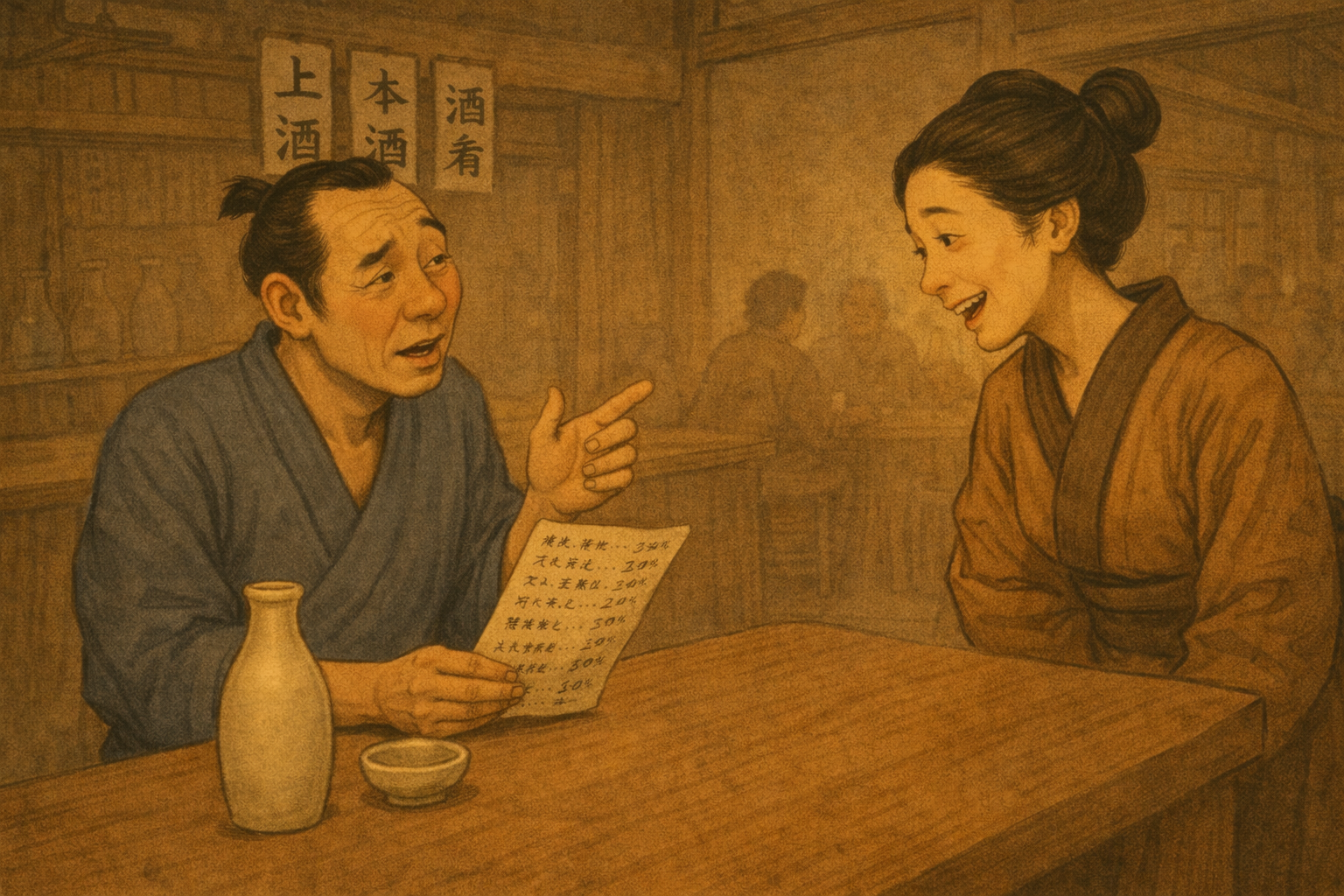
(イメージ)品書きを見ながら代金の計算をする客と女将 (Image)A customer anxiously calculating while studying the menu, as the proprietress looks on
三.欲張りたい心と、財布のあいだ 3. Between Appetite and Wallet
男は、指を折りながら、まだ計算を続けています。
「今夜は、全部で八百文まで、と決めてきたんだ」
「ずいぶんきっちりしてるねえ」
「こないだは、つい調子に乗って千文超えちまってね。女房に“あんたの酒代で家計が傾く”って叱られたんだ」
「へえ、女房勘定かい」
「そうさ。だから今夜は、なるべくうまく、“飲んだ気”になれて、“食べた気”にもなれて、なおかつ八百文に収めたい」
女将は肩をすくめます。
「ずいぶん欲張りな注文だねえ。じゃあこうしようか。酒を一合、豆腐を半丁。
それに、ぬたは二人前あるから、半分だけ出してやるよ」
「半分てのは、いくらだい?」
「三百の半分だから百五十」
「じゃあ、酒二百、豆腐二百、ぬた百五十で……五百五十文か。よし、それでいこう」
The man kept counting on his fingers.
“I decided before I left home: eight hundred mon total, that’s it.”
“You’re awfully strict with yourself,” she said.
“Last time I got carried away and went over a thousand.
My wife scolded me, said, ‘Your drinking is sinking our household budget.’”
“Ah, your wife runs the books then,” the proprietress chuckled.
“That’s right. So tonight, I want to feel like I’ve drunk well,
eaten well, and still kept it all within eight hundred mon.”
She shrugged theatrically.
“That’s quite the greedy wish.
All right then: one cup of sake, half a block of tofu, and the vinegared dish—there’s enough for two in that bowl,
so I’ll serve you just half.”
“And how much for half?” he asked.
“Half of three hundred is one-fifty.”
“So… 200 for sake, 200 for tofu, 150 for the vinegared dish… 550 in total. All right, I’ll take that set.”

(イメージ)そろばんをはじきながら計算している男と女将 (Image) A man clicking away on an abacus as the proprietress watches
四.一杯のあとに、もう一杯 4. After One Cup… Just One More
出てきた肴は、量こそ控えめながら、どれも味がよく、酒も上等。 男は、ひと口、またひと口と盃を重ねるうちに、頬がほんのり赤くなってきます。
「女将さん、この豆腐、なかなかいけるねえ」
「そりゃそうさ。毎朝仕入れてるんだから」
「このぬたも、もうちょっと欲しいくらいだ」
「さっき半分にした残りが、まだあるよ」
「そいつを……いくらだっけ?」
「さっきと同じ百五十」
「ふむ……じゃあ、ついでに酒も、もう一合」
「はいよ。酒二百、ぬた百五十、さっきの分と合わせると……」
女将が指を折り始めると、男は慌てて止めます。
「いやいや、勘定はあとでいいよ。今は、味を計算させておくれ」
「さっきまでの堅い男は、どこへ行ったんだい」
「酒の中に沈んでいったよ」
The dishes were modest in size but well seasoned, and the sake was of good quality. Before long, the man’s cheeks turned rosy as he sipped cup after cup.
“This tofu is excellent,” he said.
“Of course,” replied the proprietress. “I buy it fresh every morning.”
“And this vinegared dish… I wouldn’t mind a little more.”
“There’s still the other half I kept back,” she offered.
“And how much was that again?”
“Same as before—one-fifty.”
“I see… Then, while you’re at it, bring me one more cup of sake.”
“Certainly. Two hundred for the sake, one-fifty for the dish, plus what you’ve already had…”
As she started counting on her fingers, the man waved her off.
“No, no, settle the bill later. Right now, let me just calculate the flavor.”
“What happened to the cautious fellow from earlier?” she teased.
“He’s sunk to the bottom of the sake cup,” the man replied.

(イメージ)すっかりお酒で気分が良くなった男と彼に話している女将 (Image) A man in high spirits from the sake, chatting with the proprietress
五.オチ ― 一番高くついたのは何か 5. The Punchline – What Cost Him the Most?
さて、そろそろ帰ろうかという頃。
「女将さん、そろそろ勘定を頼むよ」
「はいよ。さっきの分と今の分で――」
女将が手際よく合計すると、男は思わず目を丸くします。
「おや、けっこういったねえ。今夜は八百文までのはずが……ずいぶんはみ出した」
「最初はそう言ってたねえ」
「酒はいくつ頼んだかね?」
「一合、また一合、ついでにもう一合で、三合」
「豆腐は?」
「半丁」
「ぬたは?」
「一人前の半分と、その残り全部」
男は、しばらく黙って考え込むと、苦笑いして言います。
「なるほど。一番高くついたのは――“最初に値段を気にした時間”だね。
あれがなけりゃ、もっとゆっくりうまく飲めたのに」
女将も笑って言います。
「こっちから見りゃ、一番ありがたかったのは、“あとでどうせゆるむ懐”さね」
二人は顔を見合わせて笑い、今夜のところはお開きとなりました。
At last, it was time to head home.
“Madam, I think I’d better have my bill now,” the man said.
“All right,” she replied. “Let’s see… adding what you had earlier to what you just ordered…”
When she named the total, his eyes widened.
“That much? I was supposed to stay within eight hundred tonight… I’ve gone well past it.”
“That’s what you said at the beginning,” she reminded him.
“How many cups of sake did I end up having?”
“One, then another, then ‘just one more’—three in all.”
“And the tofu?”
“Half a block.”
“And the vinegared dish?”
“Half at first, then the rest.”
He fell silent, thinking it over, then gave a wry smile.
“I see. What cost me the most tonight wasn’t the sake or the food…
it was the time I spent worrying about prices at the start.
Without that, I could’ve enjoyed my drink more slowly.”
The proprietress laughed.
“From where I sit, what helped my business most was your wallet loosening up in the end.”
They shared a laugh, and the evening at the izakaya drew to a gentle close.
六.ひとこと解説 ― 江戸の居酒屋と日本酒文化 6. A Brief Note – Edo Izakaya and Sake Culture
落語に登場する「居酒屋」は、現代の居酒屋と同じく、 仕事帰りの人々が一日の疲れを癒やす、気軽な酒場として描かれます。 高級な料理ではなく、豆腐や煮物など素朴な肴を、日本酒と一緒に楽しむ空間です。
この噺では、懐具合を気にしながらも、結局は酒と雰囲気に負けてしまう庶民の姿を通して、 「計算だけでは割り切れない、人と酒との付き合い方」が、ユーモラスに表現されています。 日本酒は、ただ飲むだけでなく、人と人との間に会話と笑いを生み出す存在である―― そんな一面が、江戸の居酒屋の噺にも息づいています。
In rakugo, the izakaya is much like its modern counterpart: a casual place where people stop by after work to unwind. Rather than luxurious dishes, simple fare such as tofu or simmered vegetables is served alongside sake.
In this story, a man who worries about his budget but ends up yielding to the charm of sake and atmosphere represents the everyday townsfolk of Edo. The tale humorously suggests that the relationship between people and sake cannot be reduced to mere calculation. Sake is not only something to drink; it is something that creates conversation and shared laughter—especially in a bustling izakaya.
※ここで紹介している落語は、物語の流れや文化的な魅力をお伝えするための簡易版です。実際の高座には、語り手の技や間(ま)、声色の変化など、多くの魅力があります。ぜひ機会があれば、プロの落語家の実演をお楽しみください。
※The rakugo stories introduced here are simplified versions designed to convey the flow of the narrative and the cultural charm behind each piece. The true humor, timing, and expressive voices of rakugo can only be fully appreciated in a live performance. If you have the chance, please enjoy a professional rakugo storyteller’s performance.