
← 日本酒にまつわる落語 一覧にもどる Back to sake & rakugo stories
禁酒番屋(きんしゅばんや) Kinshu-banya – The Sake Prohibition Guardhouse
ここでは、古典落語「禁酒番屋」を、日本語と英語で“物語として”お楽しみいただけるようにご紹介します。 江戸に突然出された「禁酒令」と、それを取り締まる番屋でのドタバタ劇を、少し情景描写を交えてお届けします。
Here you can enjoy the classic rakugo story “Kinshu-banya” in both Japanese and English. An unexpected prohibition on sake is declared in Edo, and chaos breaks out at the guardhouse in charge of enforcing it. This retelling adds gentle descriptive touches so you can better picture the scenes.
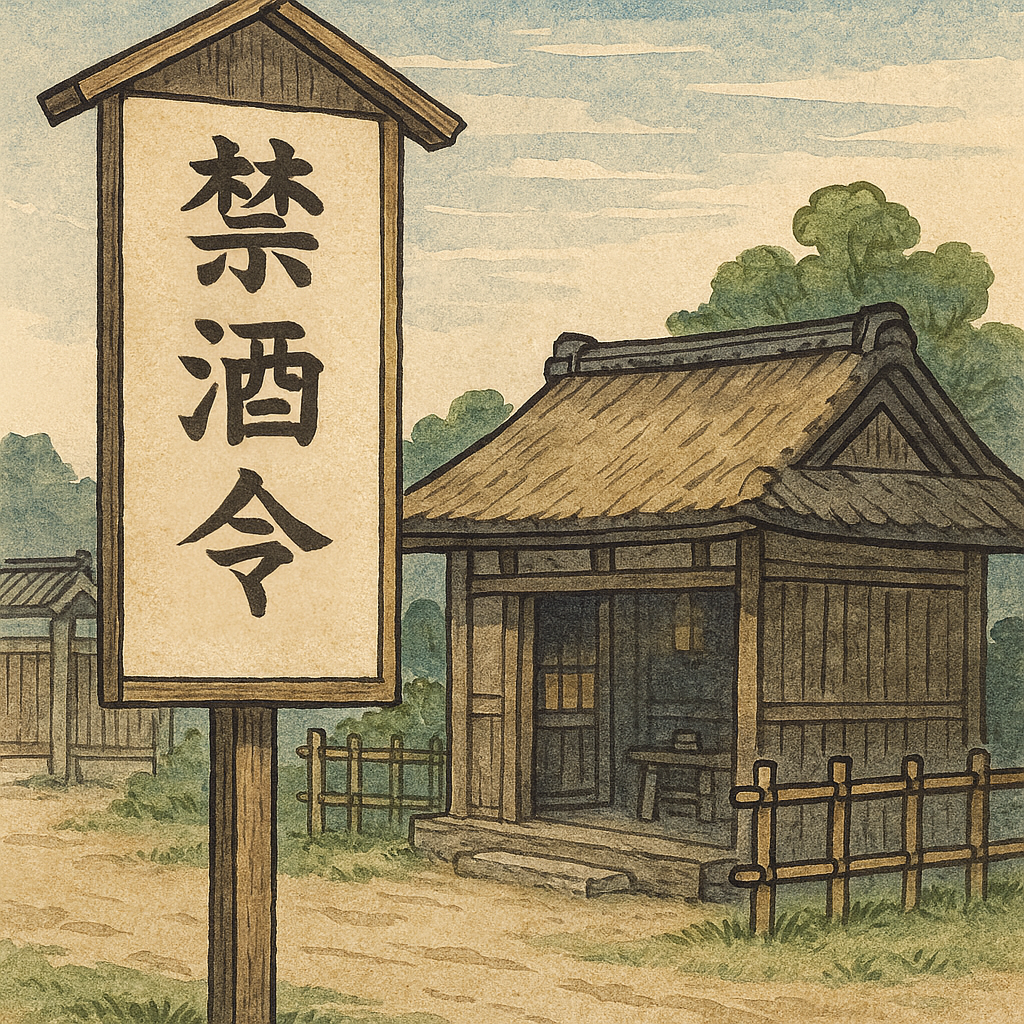
(イメージ)「酒断ち」の高札と、町外れの番屋 (Image) A prohibition notice and the guardhouse at the edge of Edo
一.江戸に「禁酒令」出づ 1. A Sake Prohibition in Edo
時は江戸のころ。ある日、「酒は一切ご法度」というお触れが町中に貼り出されます。 祝い事であろうが、晩酌であろうが、とにかく酒は飲んではならぬ、という厳しい禁酒令です。
お触れの見張り役として設けられたのが「禁酒番屋」。 町外れの番屋には役人たちが詰めていて、酒の匂いをさせて通りかかる者がいれば、すぐさま呼び止めて取り調べる、という段取りになっています。
もっとも、江戸っ子にとって酒は暮らしの楽しみのひとつ。 「さて、そう簡単にやめられるものか」と、町のあちこちで、さっそく知恵比べが始まります。
In the days of Edo, one morning a new notice was posted all over town: “Sake is strictly forbidden.” No drinking allowed for celebrations, evening cups, or anything else. It was a harsh prohibition order.
To enforce this law, a special checkpoint was set up, known as the “kinshu-banya,” the sake prohibition guardhouse. Officials were stationed there to stop anyone passing by who smelled of alcohol and interrogate them on the spot.
Of course, for the people of Edo, sake was one of life’s daily pleasures. “We can’t just quit that easily,” they thought. All over town, a quiet battle of wits began.
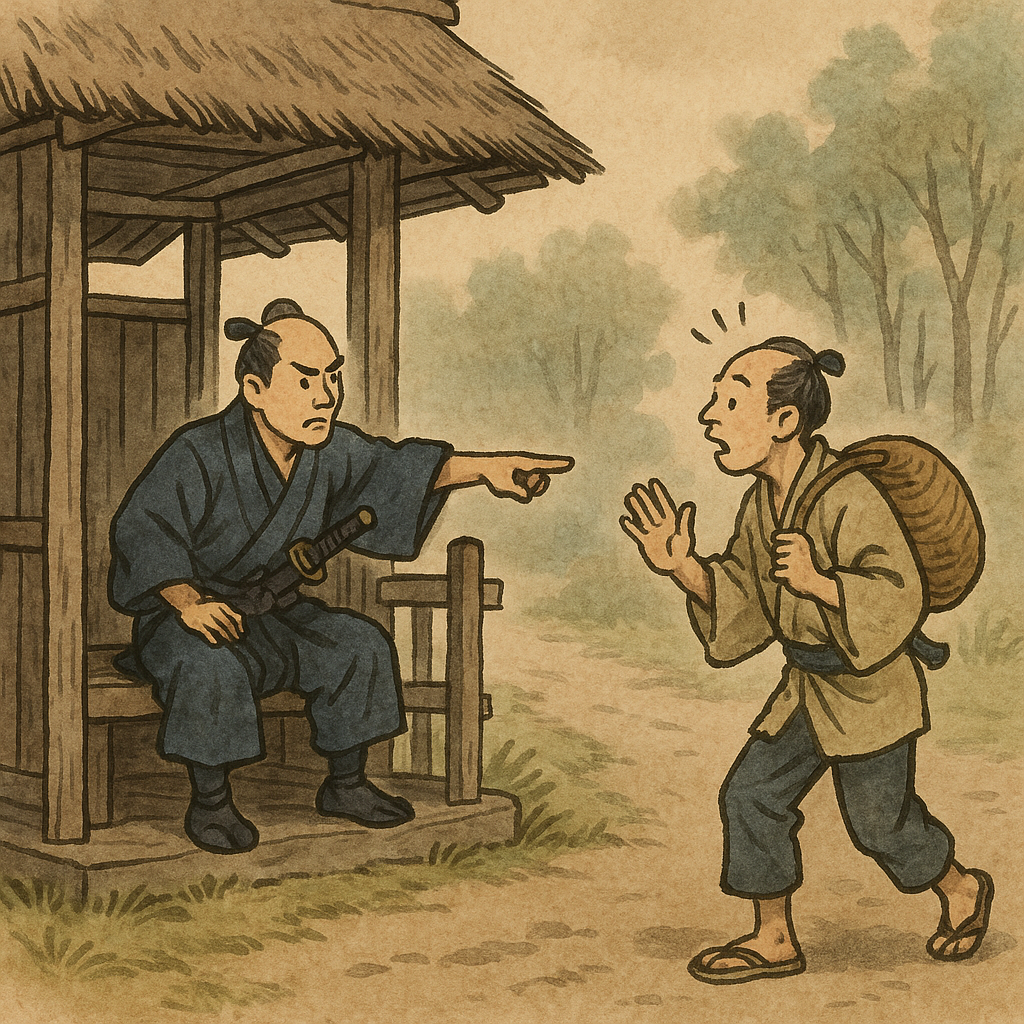
(イメージ)禁酒番屋で呼び止められる町人 (Image) A townsman stopped and questioned at the prohibition guardhouse
二.最初の検問 2. The First Inspection
さっそく、一人の男が番屋の前をふらりと通りかかります。 着物の前をはだけ、顔はほんのり赤い。どう見ても一杯ひっかけてきた様子です。
「おい、そこで止まれ。酒の匂いがするぞ」
役人が呼び止めると、男は慌てて言い訳を始めます。
「いえいえ、これは酒じゃありません。漬物を食べたもので」
「漬物でそんなに酔うか」
「よく漬かったやつでして」
番屋の連中は顔を見合わせ、「これは怪しい」と男を座敷に上げて取り調べます。 徳利や盃は持っていないか、懐や風呂敷の中まで念入りに改めますが、証拠は出てきません。
Before long, a man came strolling past the guardhouse. His kimono was loose at the front, and his face was slightly flushed. He looked very much like he had just had a drink.
“Hey, you there. Stop. You smell of sake,” an official called out.
The man hurried to defend himself.
“No, no, this isn’t from drinking. I just had some very strong pickles.”
“Pickles don’t make you that drunk,” the official replied.
“These were thoroughly pickled,” the man insisted.
The guards exchanged glances. “Suspicious,” they muttered, and took him inside for questioning. They checked his sleeves, his sash, and even the cloth bundle he carried, searching for flasks or cups, but no physical evidence of sake appeared.
三.知恵比べと言い訳の数々 3. A Battle of Wits and Excuses
そのうち、番屋には次々と「怪しい客」が連れて来られます。 味噌樽を抱えた八百屋、湯気の立つ鍋を運ぶ料理人、やけに上機嫌な職人たち……。
味噌樽を抱えた男は、樽の中身を怪しまれてこう言い張ります。
「これは味噌でして。匂いが似ているかもしれませんが、決して酒ではありません」
ふたを開けてみると、表面こそ味噌ですが、その下には酒をたっぷり染みこませた豆腐が隠してある、という始末。
また、鍋を運ぶ料理人は、酒の香りの立ちのぼる湯気を指摘されると、
「これは料理の香り。酒なんて一滴も使っておりません」と胸を張ります。
ところが、一口味見をしてみれば、どう考えても上等な酒の風味がしっかり効いている。
江戸の町人たちは、禁酒令を破りながらも、どこか楽しげに言い訳を繰り出します。 取締る側も、だんだん呆れながらも、その工夫に感心せずにはいられません。
Soon, all kinds of “suspicious characters” began arriving at the guardhouse: a greengrocer carrying a miso barrel, a cook with a steaming pot, and cheerful craftsmen in unusually good spirits.
The man with the miso barrel was questioned about the contents.
“This is miso paste,” he insisted. “The smell might be similar, but it certainly isn’t sake.”
When the lid was opened, the surface was indeed miso—but underneath, blocks of tofu had been soaked through with sake.
The cook, carrying a hot pot from which fragrant steam rose, was also stopped.
When the officials pointed out the aroma, he boldly replied,
“That’s just the scent of fine cooking. I haven’t used a single drop of sake.”
Yet, when the broth was tasted, it clearly carried the mellow character of quality sake.
The townspeople of Edo broke the prohibition with a certain playful spirit, inventing excuse after excuse. The officials, for their part, found themselves exasperated—yet secretly impressed by the creativity on display.
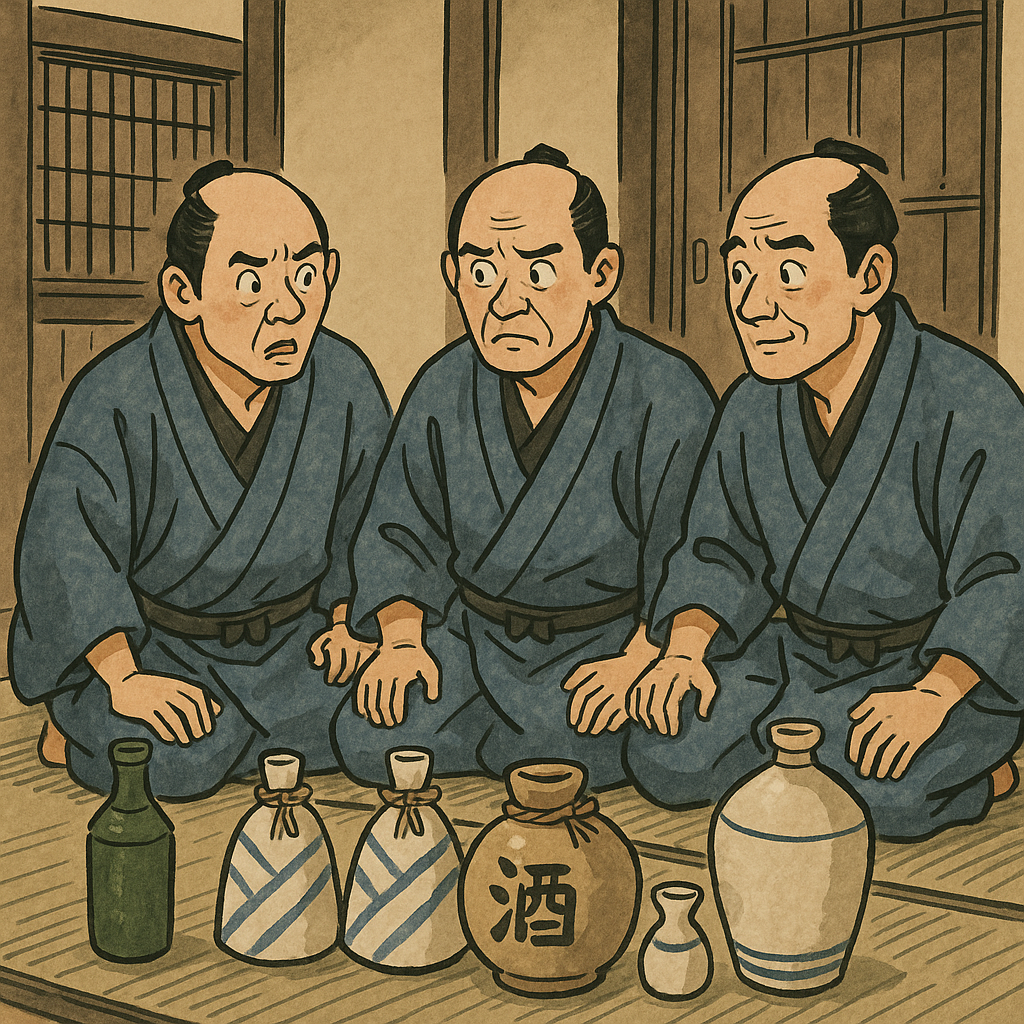
(イメージ)没収した酒を前に、顔を見合わせる役人たち (Image) Officials eyeing the confiscated sake at the guardhouse
四.取り締まりのはずが、味見が止まらない 4. From Enforcement to “Tasting”
こうして没収された酒や、酒気の残る料理が、番屋には少しずつ溜まっていきます。 座敷の片隅には徳利や盃、鍋や樽が並び、あたりには良い香りが漂います。
そこで、ある役人が言い出します。
「これは証拠品だがな、本当に酒かどうか、誰かが確かめねばならん」
「そうだそうだ、役目であれば仕方がない」
などと言いながら、盃に少しだけ注いで口に運びます。
「うむ、これはいかん。かなり上等な酒だ」
「証拠として記録しておこう。もう一杯、念のために」
そのうち、「味見」はいつしか「晩酌」になり、番屋の空気もすっかりなごやかになっていきます。
As time passed, confiscated sake and sake-laced dishes accumulated in the guardhouse. Tokkuri flasks, small cups, pots, and barrels lined one corner of the tatami room, and a pleasant aroma filled the air.
At last, one official spoke up.
“These are all pieces of evidence, but someone must confirm whether they are truly sake.”
“Indeed,” another agreed. “If it’s for the sake of our duty, there is no helping it.”
With that, they poured a little into a cup “for inspection.”
“Hmm… This is no good. Far too fine a sake,” one remarked.
“We should document that quality in the record. Another cup, just to be sure.”
Before long, this “tasting” quietly turned into an evening drinking session, and the tension in the guardhouse melted away.
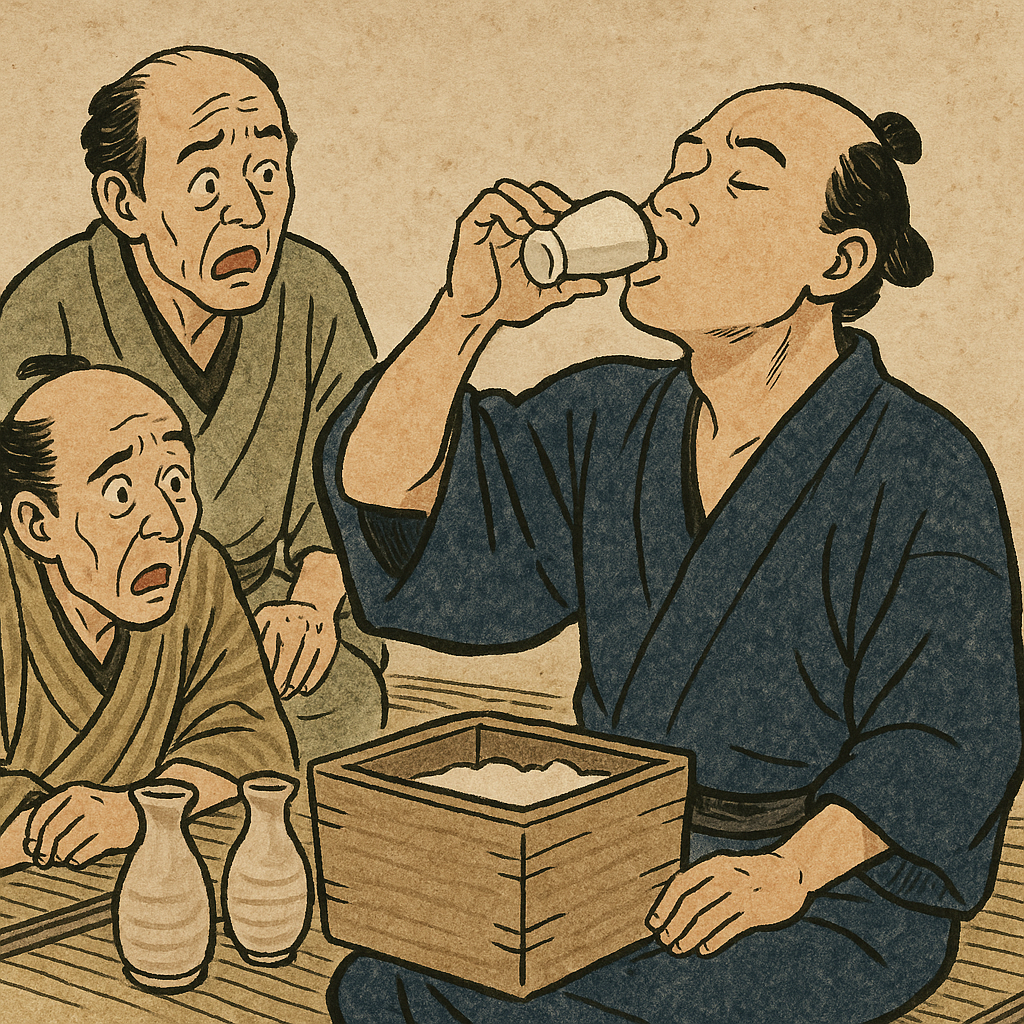
(イメージ)一番飲んでいるのは誰か? (Image) Who is drinking the most?
五.オチ ― 一番飲んでいるのは誰か 5. The Punchline – Who’s Drinking the Most?
夜も更けるころには、番屋の役人たちの顔も、いつの間にか真っ赤になっています。 そこへ、さきほど捕まっていた町人が、用事を終えて戻ってきます。
「番所で酒を取り締まっていると聞きましたが……」
と戸をあけると、中では役人たちが盃を手に、いい気分で笑っています。
「おいおい、一番飲んでいるのは、ここのお歴々じゃありませんか」
町人にそう突っ込まれ、役人たちは気まずい顔をしながらも、どこか居心地の悪さを笑いでごまかします。
「いやいや、これは取締りの一環で……味見であって、決して酒盛りではない!」
そう言い張るものの、徳利の数と空になった盃の山が、すべてを物語っています。
こうして、酒を禁じるはずの番屋が、実は町で一番の「酒の湧き出る場所」になっていた、というところで噺は幕となります。
By late evening, the faces of the officials were as red as any drunkard’s. Just then, one of the townsmen who had been questioned earlier came back on some errand.
“I heard this is where you crack down on drinking…” he said, sliding open the door.
Inside, the officials were sitting comfortably with cups in hand, laughing in high spirits.
“Well now,” the man remarked, “it seems the people drinking the most are the gentlemen of the guardhouse themselves.”
The officials looked embarrassed, but quickly tried to recover their dignity.
“No, no, this is all part of enforcement. We are merely tasting, not holding a drinking party!”
Yet the number of empty flasks and the stack of used cups told a different story.
And so, the very place meant to suppress sake had quietly become the liveliest drinking spot in town—that is the punchline of “Kinshu-banya.”
六.この噺に流れる「江戸らしさ」と日本酒 6. Edo Humor and the Role of Sake
「禁酒番屋」は、酒そのものを非難する噺ではありません。 むしろ、「上からの決まり」と「庶民の暮らし」の間に生まれるズレや、 お上をうまくかわそうとする町人たちの知恵とユーモアを描いた噺です。
そして、取り締まる側の役人までが、結局は人間らしく酒の誘惑に負けてしまう。 日本酒は、善悪を白黒つけるための題材ではなく、人の弱さや可笑しさを浮かび上がらせる「鏡」のような存在として描かれています。
江戸の落語には、このように日本酒を通して、人間味と笑いをたっぷり味わわせてくれる噺が数多く残されています。
“Kinshu-banya” is not a story that condemns sake itself. Rather, it gently highlights the gap between strict rules imposed from above and the realities of ordinary people’s lives, and it celebrates the wit and humor with which townsfolk slip around such rules.
Even the officials charged with enforcing the law ultimately give in to the temptation of sake, revealing their own humanity. In this story, sake is not a symbol of vice or virtue, but a mirror that reflects human weakness, warmth, and foolishness in a humorous light.
Many Edo-period rakugo pieces use sake in this way—to let the audience savor both laughter and the rich, human side of everyday life.
※ここで紹介している落語は、物語の流れや文化的な魅力をお伝えするための簡易版です。実際の高座には、語り手の技や間(ま)、声色の変化など、多くの魅力があります。ぜひ機会があれば、プロの落語家の実演をお楽しみください。
※The rakugo stories introduced here are simplified versions designed to convey the flow of the narrative and the cultural charm behind each piece. The true humor, timing, and expressive voices of rakugo can only be fully appreciated in a live performance. If you have the chance, please enjoy a professional rakugo storyteller’s performance.