
← 日本酒にまつわる落語 一覧にもどる Back to sake & rakugo stories
酒癖(さけぐせ) Sakeguse – Drinking Habits
ここでは、古典落語でおなじみの題材「酒癖」をもとにしたお話を、日本語と英語で“物語として”ご紹介します。 酔うとつい出てしまう、その人ならではの癖(くせ)と、日本酒が生み出す人間味に焦点を当てた一席です。
Here we present a story based on the classic rakugo theme “Sakeguse,” or “drinking habits,” in both Japanese and English. It focuses on the little quirks that appear when people drink, and the human warmth that sake can reveal.
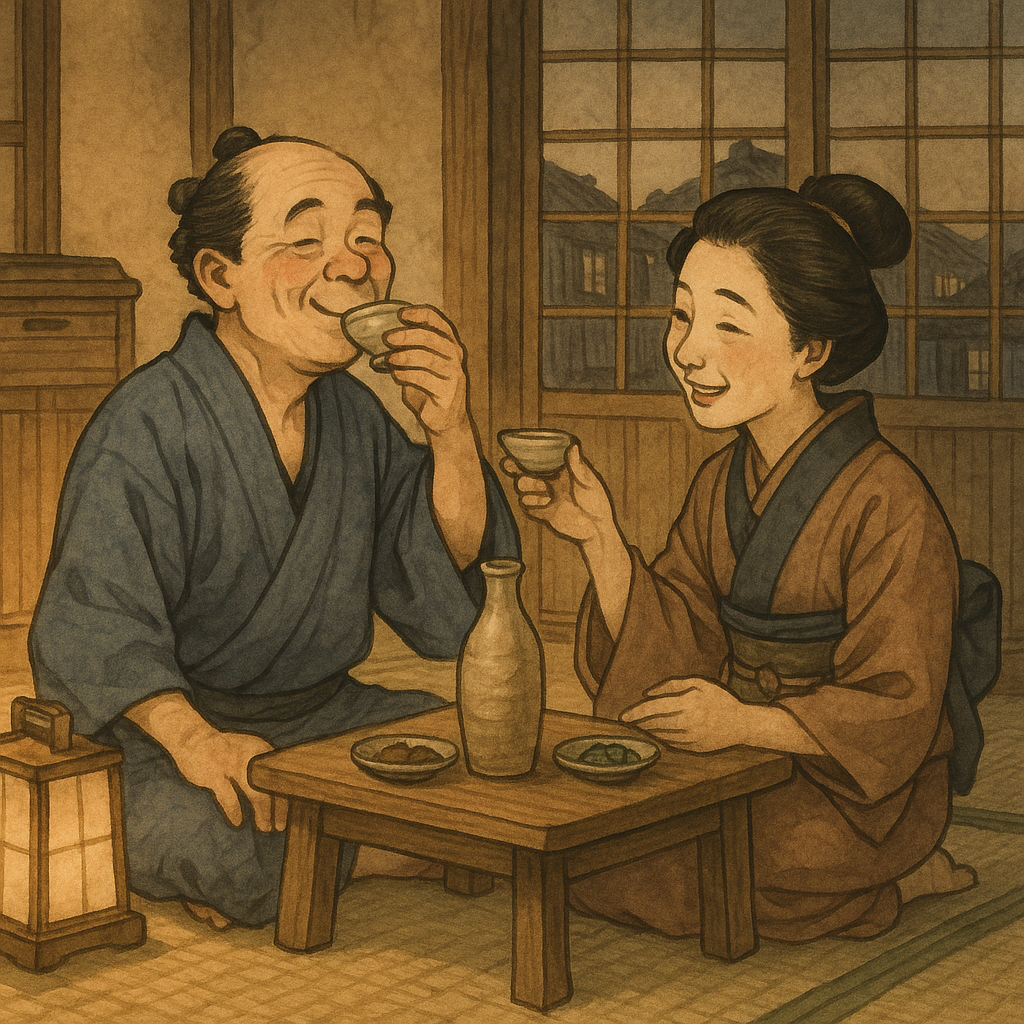
(イメージ)江戸の長屋で晩酌をする夫婦 (Image) A husband and wife sharing sake in an Edo tenement
一.酒好きな亭主と、心配な女房 1. A Sake-loving Husband and His Worried Wife
時は江戸のころ。長屋に住むある夫婦、亭主は大の酒好き。 仕事を終えて帰ってくると、つい一杯、二杯と徳利に手が伸びます。
女房はそれを見て、いつも苦笑いです。
「あんた、またそんなに飲んで。酔うと酒癖が悪くなるんだから」
亭主は盃を置いて、むっとします。
「人を酔っぱらいみたいに言うな。おれはな、酒に飲まれてるんじゃない。酒を味わっているんだ」
「どっちにしても、帰ってきたらまず『ただいま』より先に徳利に手がいくのは、酒癖って言うんだよ」
女房はふと、思いついたように言います。
「じゃあさ、あんたの“酒癖”って、どんな順番で出てくるのか、ちゃんと教えておくれよ。
そうすりゃ、どこまでが“楽しいお酒”で、どこからが“止めなきゃいけないお酒”か、わかるからさ」
In old Edo, there lived a married couple in a humble row house. The husband loved sake. Every day after work, his hand reached for the tokkuri flask almost before he said hello.
His wife, watching this routine, could only smile wryly.
“There you go again. Once you’re drunk, your sake habits get worse and worse,” she sighed.
The husband set down his cup, offended.
“Don’t talk like I’m some hopeless drunk. I’m not being carried away by the sake—I’m savoring it.”
“Maybe so,” she replied, “but when you reach for the flask before saying ‘I’m home,’ that’s what we call a drinking habit.”
Then, an idea struck her.
“All right, why don’t you tell me exactly what your ‘sake habits’ are, and in what order they appear?
Then I’ll know where your drinking is still ‘fun’ and where I really have to stop you.”
二.酒癖の“段階”を語る 2. Explaining the “Stages” of a Drinking Habit
亭主は少し照れくさそうにしながらも、真面目な顔で考え始めます。
「まず一杯、二杯ひっかけると、鼻歌が出てくる。
これはまだいい。自分でもご機嫌なだけだと分かってる」
「うんうん、いつも唄ってるねえ」
「それから少し進むと、やたらと人に酒をすすめる。
『まあまあ一杯どうぞ』ってな。これはな、気前がよくなってるだけだ」
「そのたびに、うちの財布が痩せていくんだよ」
「さらに進むと、今度は泣き上戸だ。
昔のことなんか思い出して、『親父には迷惑かけた』なんて、しくしくやる」
「ああ、あれは毎回聞いてるから、もう覚えてしまったよ」
「そして一番いけないのが、最後の段階。急に説教をはじめてな。
その場にいるやつ全員に、『人間はこうあるべきだ』なんて偉そうなことを言い出す」
女房は、ふむふむとうなずきます。
「なるほどね。鼻歌が出て、人にすすめて、泣いて、説教がはじまったら、もう“打ち止め”ってことだね?」
「そうだ。説教が出たら、盃を取り上げてくれ。そこから先は、自分でも覚えてないからな」
The husband looked a bit embarrassed, but began to think it over seriously.
“After one or two cups, I start humming. That’s still all right. Even I know I’m just in a good mood then.”
“Yes,” his wife nodded, “you always start singing around that point.”
“If I go a little further, I begin pouring drinks for everyone around me.
‘Come now, have a cup,’ I say. That just means I’m generous, you see.”
“And every time, our household purse gets thinner,” she replied dryly.
“When it advances even more, I become the weepy type.
I start remembering the past and say things like, ‘I caused so much trouble for my father…’ and sniffle.”
“I’ve heard that story so many times,” she said, “I could recite it myself.”
“And the worst is the final stage,” he continued.
“I suddenly start lecturing everyone about life—telling them, ‘A proper person should live like this,’ and so on.”
His wife nodded thoughtfully.
“I see. So: first you hum, then you insist on pouring for others, then you cry, and finally you start preaching.
Once you reach the preaching, that means ‘cut him off,’ right?”
“Exactly. When I begin lecturing, take away my cup. From that point on, even I don’t remember what I’ve said.”
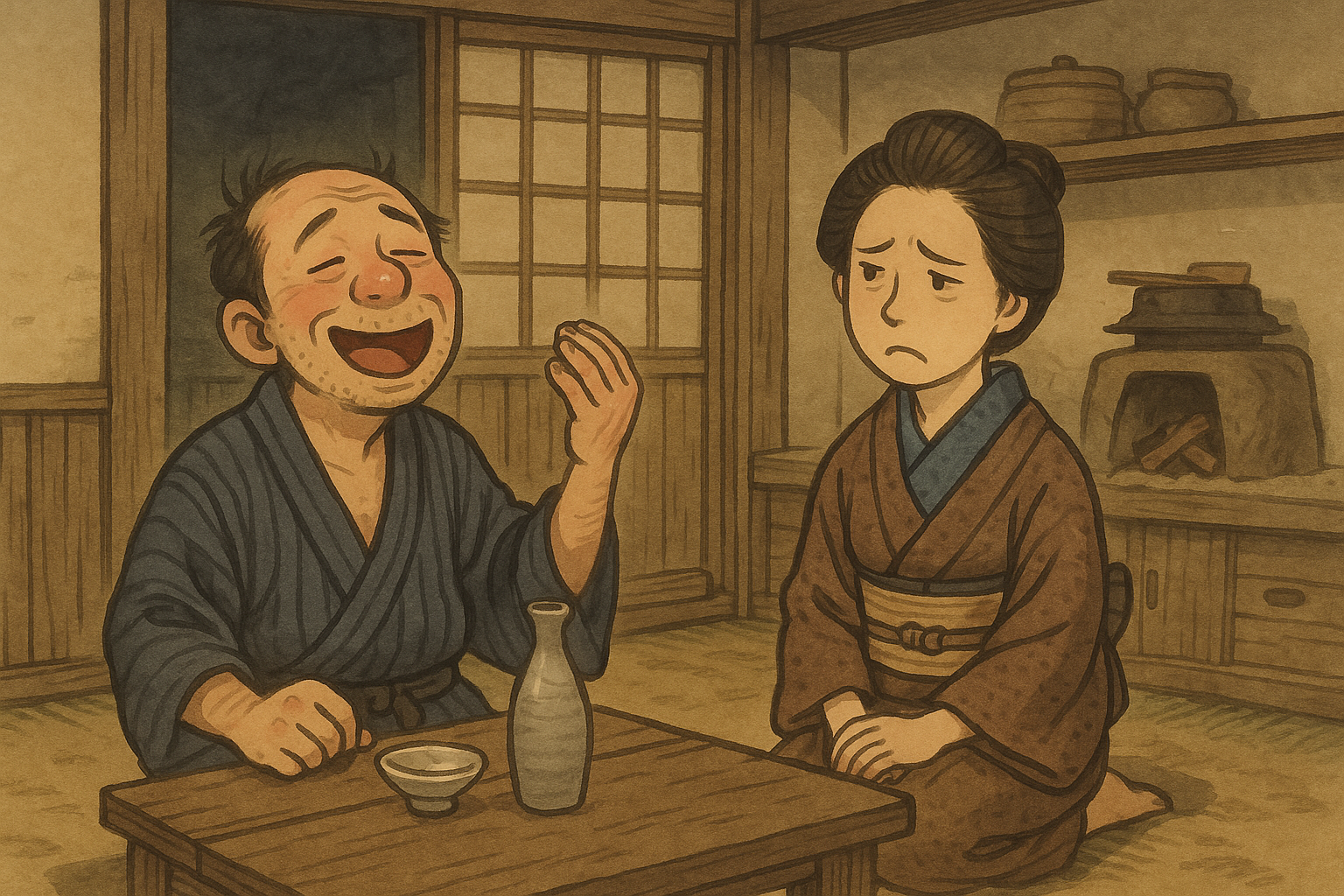
(イメージ)町の酒場で盛り上がる江戸の男たち (Image) Edo townsmen enjoying drinks at a local tavern
三.「今夜だけ」のつもりが… 3. “Just for Tonight,” or So He Says
そう話したその晩に限って、職場の仲間がやってきます。
「今夜はちょっと付き合えよ。景気づけに一杯やろうじゃないか」
亭主は女房の顔色をうかがいながら、なんとか笑ってごまかします。
「今夜はな、ほどほどにしておく。さっき自分で“酒癖の段階”を女房に話したばかりだからな」
ところが、酒場に出てみれば、そんな決意はどこへやら。 久しぶりの仲間との宴会に、徳利は次々と空いていきます。 やがて、例の“酒癖”が顔を出し始めます。
まずは鼻歌。
「おや、唄いだしたぞ」
次に、人にすすめ始める。
「まあまあ一杯どうだ。今日はおれのおごりだ」
そして、そのうち目が潤んで、親父の話が始まり……最後には、大きな声で職場の上司や世の中について説教をはじめます。
And of course, on the very night he had explained all this, a coworker dropped by.
“Come on, join us tonight,” the friend said. “Let’s have a drink to lift our spirits.”
The husband glanced at his wife’s face and tried to laugh it off.
“Just for tonight, I’ll take it easy. I just finished explaining my ‘drinking stages’ to my wife, after all.”
But once he actually arrived at the tavern, that resolution vanished. Surrounded by friends he hadn’t seen in a while, he happily emptied flask after flask. Soon enough, his familiar “sake habits” began to surface.
First came the humming.
“Ah, he’s started singing,” someone chuckled.
Then he began pouring for everyone around him.
“Come on, drink up! Tonight it’s on me!”
Before long, his eyes grew moist as he spoke about his late father… and at last, he launched into a loud sermon about his boss and the state of the world.
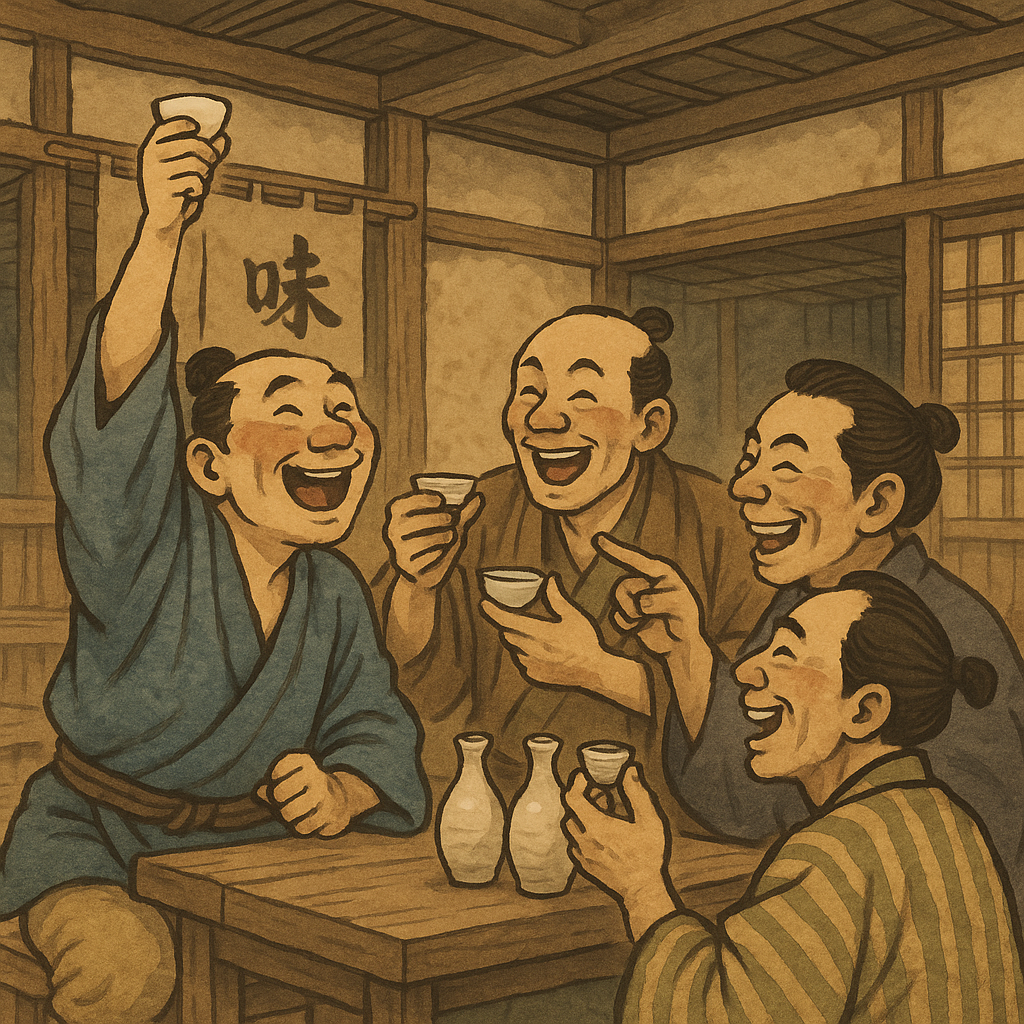
(イメージ)ふらつきながら長屋へ帰る亭主 (Image) The husband, tipsy, making his way back home
四.酒癖をめぐる攻防 4. Confrontation Over Drinking Habits
ふらふらしながら長屋へ帰ってくると、戸の向こうで女房が待ち構えています。
「おかえりなさい。ずいぶんご機嫌なご様子で」
「お、おう。ただいま。ちょっと友達と、な」
「さっき外から、あんたの鼻歌が聞こえてきたよ」
「あれはな、酒じゃない。風流ってやつだ」
「道中で会った人に、ずいぶん酒をすすめていたね」
「江戸っ子の心意気というやつだ」
「さっきは井戸端で、親父さんの話をして泣いてたって、隣から聞いたよ」
「親孝行の気持ちが深いだけだ」
女房はじっと亭主を見つめて、最後のひと言を投げます。
「じゃあ、さっき隣の人に説教してたのは?」
「あれはな、人情のご指導だ」
「……全部まとめて、『酒癖』って言うんだよ」
亭主は、返す言葉もありません。
Staggering slightly, he finally made it home, where his wife was waiting just inside the door.
“Welcome back,” she said. “You seem to be in quite a good mood.”
“O-oh, I’m home. Just had a few with some friends,” he replied.
“I could hear you humming from outside,” she pointed out.
“That wasn’t from sake,” he said quickly. “That was… artistic refinement.”
“And I heard you urging people along the road to drink with you.”
“That’s called Edo generosity,” he countered.
“The neighbor says you were crying by the well about your father.”
“That only proves I’m deeply filial,” he insisted.
His wife fixed him with a steady gaze and delivered the final blow.
“And what about the sermon you gave our neighbor just now?”
“Ah… that was heartfelt moral guidance,” he said weakly.
“All of that,” she replied, “added together, is what we call your ‘drinking habit.’”
This time, he had no comeback.
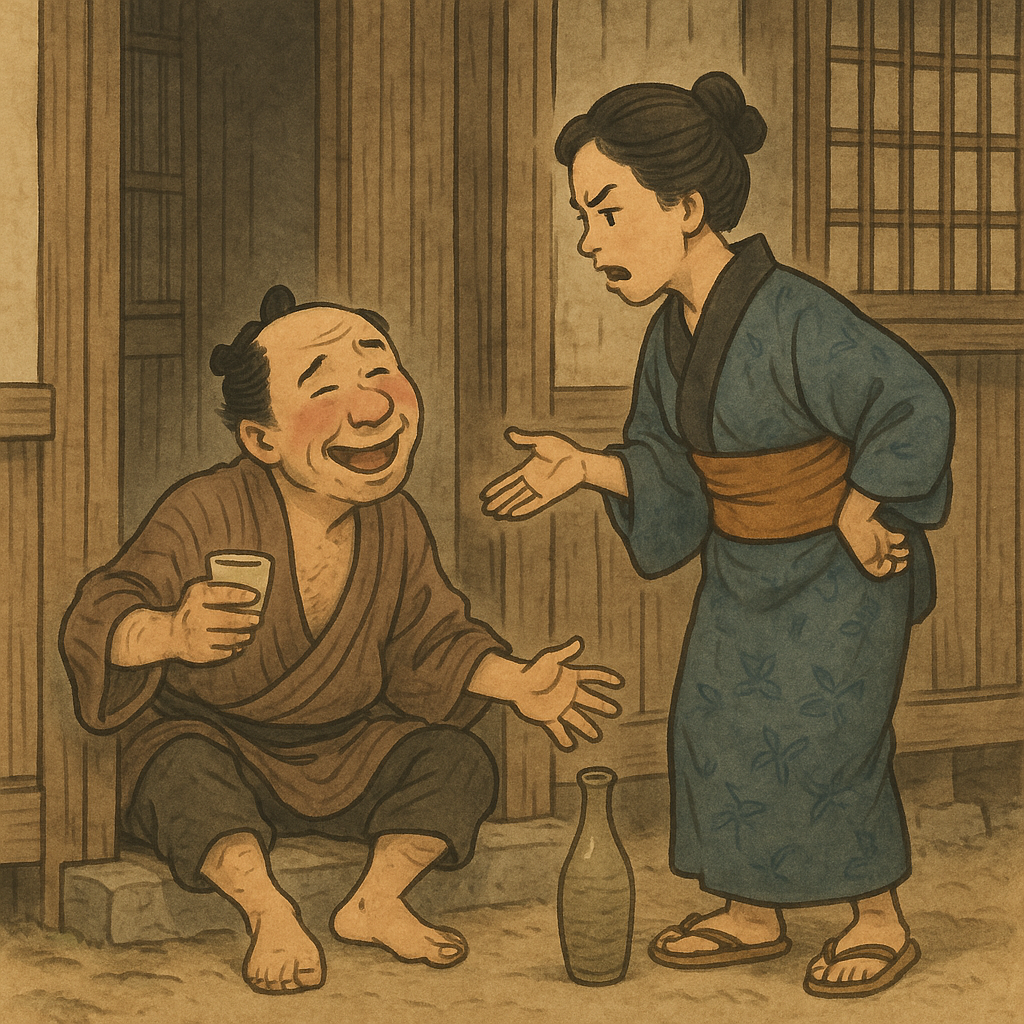
(イメージ)最後は笑い合う夫婦 (Image) The couple laughing together in the end
五.オチ ― 本当に直したい酒癖 5. The Punchline – The Habit He Really Should Fix
女房は、ため息まじりに言います。
「あんたねぇ、鼻歌も、人にすすめるのも、泣き上戸も、説教も、みんなあんたの“酒癖”だけどさ」
亭主はしょんぼりとうなだれます。
「わかってるよ。これからは気をつける」
「一番悪い酒癖はね」
女房が、少し笑いながら続けます。
「『今夜こそ控えめにする』って、毎回ちゃんと覚えてるところなんだよ」
亭主はぽかんとした顔で、やがて二人して吹き出します。
「じゃあ、あんたの酒癖とうまく付き合っていく方法を、こっちも考えるよ。
そのかわり、お酒は“楽しいところ”でやめる稽古をしておくれ」
こうして夫婦は、笑いながら徳利を片づけ、今夜のところはお開きにしたのでした。
With a sigh, his wife continued.
“Your humming, your insistence on pouring for others, your weeping, your sermons—they’re all part of your ‘drinking habit.’”
The husband drooped his shoulders.
“I know, I know. I’ll be more careful from now on.”
“But do you know what your very worst habit is?” she asked, smiling faintly.
“It’s that you remember to say ‘I’ll take it easy tonight’ every single time.”
He stared at her in surprise—and then both of them burst out laughing.
“All right,” she said, “I’ll think of a way for us to live with your sake habits.
In return, you practice stopping while sake is still fun.”
And with that, they put away the flask for the night, ending the evening on a gentle laugh.
六.ひとこと解説 ― 「酒癖」ということば 6. A Brief Note – What Does “Sakeguse” Mean?
日本語の「酒癖(さけぐせ)」は、酔ったときに出てくる、その人特有の行動や性格のことを指します。 よく知られているのは、「笑い上戸」「泣き上戸」「怒り上戸」「説教をはじめる」「人におごりたがる」など。
落語では、そうした酒癖を通して、その人の人間らしさや、家族とのやりとりの可笑しさが描かれます。 酒そのものを礼賛するのではなく、「ほどよく、楽しく付き合う」という感覚が、笑いの奥に流れています。
In Japanese, the word sakeguse literally means “sake habit” and refers to the unique behaviors or tendencies that appear when someone is drunk. Common examples include people who laugh more, cry easily, get angry, start lecturing others, or insist on treating everyone around them.
In rakugo, these drinking habits are used to highlight human warmth and the humorous relationships between family and friends. The stories are not about glorifying alcohol, but about showing how people can enjoy sake in moderation—and how their quirks can make us smile.
※ここで紹介している落語は、物語の流れや文化的な魅力をお伝えするための簡易版です。実際の高座には、語り手の技や間(ま)、声色の変化など、多くの魅力があります。ぜひ機会があれば、プロの落語家の実演をお楽しみください。
※The rakugo stories introduced here are simplified versions designed to convey the flow of the narrative and the cultural charm behind each piece. The true humor, timing, and expressive voices of rakugo can only be fully appreciated in a live performance. If you have the chance, please enjoy a professional rakugo storyteller’s performance.